

DOJ’s Fraud Division Puts Tariff Evasion on Its Corporate Priority List
Editor’s Note: The Justice Department’s National Fraud Enforcement Division told its prosecutors on Oct. 1 to prioritize corporate investigations of fraud schemes involving tariff evasion, the importation of goods or services, or forced labor. The directive follows the Trade Fraud Task Force’s August 2025 launch and a July 2026 report that the task force had passed $1 billion in recoveries, penalties, forfeitures, and publicly charged losses, a composite figure that includes allegations. For legal, compliance, information governance, and eDiscovery teams, the practical issue is evidentiary: can they find, preserve, reconcile, and explain the records behind each customs declaration? The post outlines the civil, False Claims Act, and criminal exposure an importer faces, then describes how HaystackID approaches a trade fraud response, from legal holds and preservation requests to entry-by-entry reconciliation and generative AI analysis tied to source documents. It also covers the mitigating evidence a narrow response can miss and the timing limit on prior disclosure. Professionals should watch for the first corporate resolutions following the directive and the document requests that accompany them.
DOJ’s Fraud Division Puts Tariff Evasion on Its Corporate Priority List
By HaystackID Staff
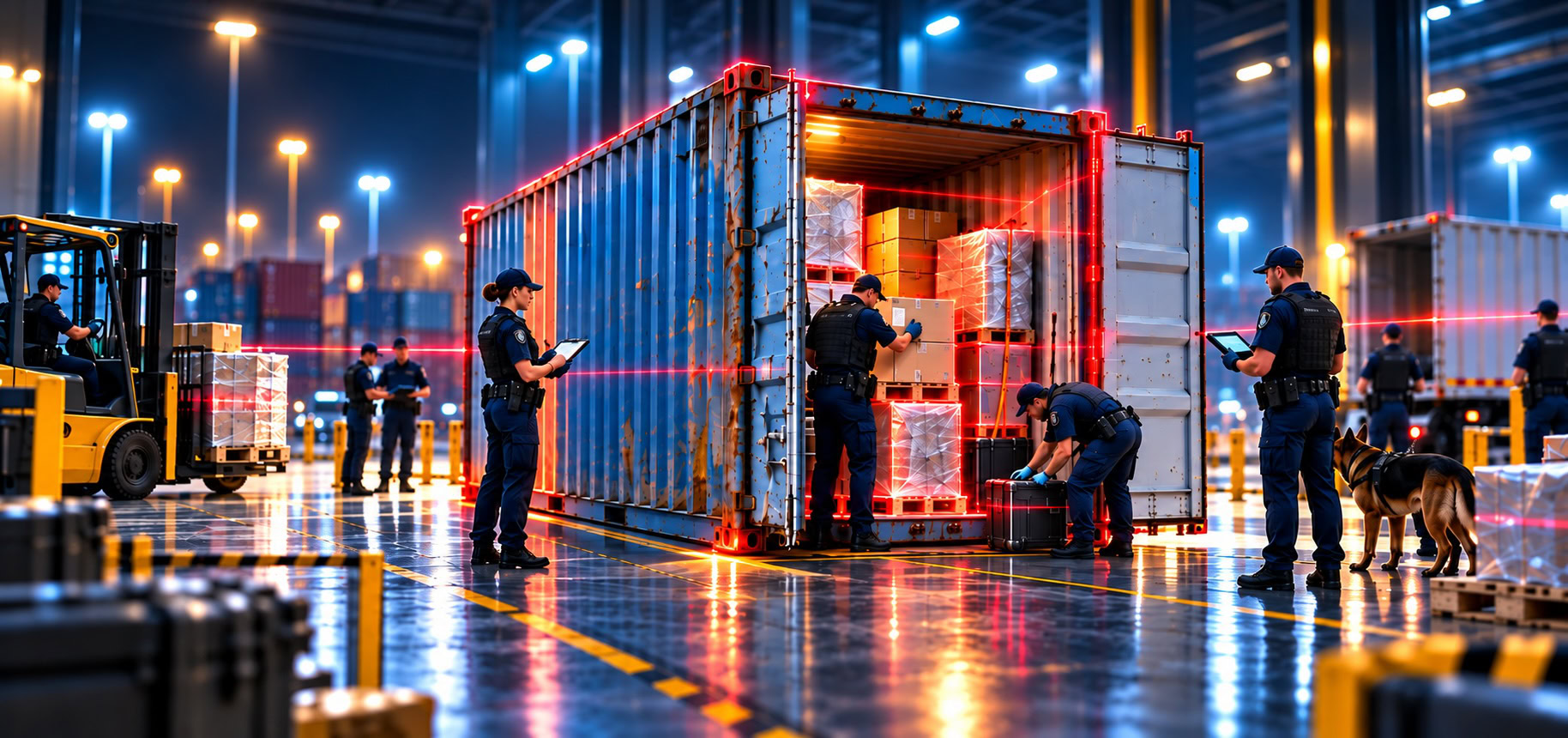
On Oct. 1, the Justice Department’s National Fraud Enforcement Division (“Fraud Division”) directed its prosecutors to prioritize corporate investigations of fraud schemes involving tariff evasion, the importation of goods, or forced labor.
For an importer, the directive raises a practical question long before any legal argument begins. When a civil investigative demand or grand jury subpoena arrives, can the company find, explain, and produce the evidence behind every declaration it made to U.S. Customs and Border Protection (CBP)?
4 Priorities, and Trade Is One of Them
Assistant Attorney General Colin M. McDonald issued the instruction as Directive 26-12, an internal memorandum to the Fraud Division. The memo specifies four categories of fraud for prosecutors to prioritize when they open and conduct corporate investigations. Healthcare industry fraud enforcement rises above all others. The fourth category targets “Fraud schemes involving tariff evasion, importation of goods or services, or forced labor” as the chief priority. As an internal directive to prosecutors, the memo does not change customs law or create new obligations for importers. What it does change is where federal enforcement prioritization goes.
The directive also lists factors that must carry “great weight” when prosecutors decide whether to charge a company and how to negotiate a plea or engage in another agreement. Corporate management’s complicity through actions or knowledge of the scheme is first on that non-exhaustive list. Efforts to conceal fraud from government agencies or auditors come second. Proving or disproving both factors relies heavily on actions found in structured databases and communications substantiating intent.
How Trade Fraud Climbed the DOJ Agenda
Trade fraud has been climbing the U.S. Department of Justice (DOJ) agenda since May 2025, when a Criminal Division memo signed by Matthew R. Galeotti listed “trade and customs fraud, including tariff evasion” among 10 high-impact white-collar enforcement areas. On Aug. 29, 2025, the DOJ launched the interagency Trade Fraud Task Force (TFTF) with the Department of Homeland Security (DHS), working alongside CBP and Homeland Security Investigations (HSI).
On July 14, 2026, the DOJ reported that the TFTF had already passed $1 billion in civil and criminal recoveries, penalties, forfeitures, and publicly charged losses in less than one year. That figure is a composite, as publicly charged losses are allegations, not collected funds. “For too long, fraud actors have viewed customs violations as a mere surcharge or cost of doing business,” McDonald said in that announcement. The department also announced the creation of a Global Trade & Commerce Enforcement Section (GTCES) inside the Fraud Division and released “A Resource Guide to Trade Fraud Enforcement, a joint DOJ and DHS reference.”
On August 13, 2026, McDonald issued a priorities memo declaring that the DOJ is building “the most sophisticated, innovative, and data-driven white-collar law enforcement component in the world.” It also named transshipment, country-of-origin fraud, and undervaluation among the trade schemes prosecutors will pursue. However, the emphasis on data cuts both ways. A subsequent October 1, 2026 directive states that the DOJ is identifying potential trade fraud data through analytics at its National Fraud Detection Center (NFDC) and partner components. Industry insiders speculate that this effort requires AI analysis of millions of data points across a wide swath of the marketplace. With that depth of governmental analysis, a company answering that kind of inquiry must already have thorough data organization sufficient to respond to governmental inquiry.
Exposure Arrives From Several Directions at Once
An investigation response must originate by knowing what is at stake. The Resource Guide states that it is informational only, creates no enforceable rights or defenses, and does not constitute legal advice. However, the guide’s summary of trade fraud enforcement and infraction typologies clearly maps the legal and business risks. According to the guide, the Importer of Record (IOR) must use reasonable care to give CBP accurate information and remains liable for underpaid duties or penalties resulting from misstatements, even when a customs broker prepared them. The guide adds that the IOR cannot “contract away” that responsibility.
Civil penalties under 19 U.S.C. § 1592 scale with culpability. A fraudulent violation can draw a penalty up to the domestic value of the merchandise. Respectively, negligent and grossly negligent violations are capped at two or four times the amount of the lawfully owed duties, taxes, and fees lost or potentially lost. Where a violation did not affect the assessment of duties, penalties are capped at 20 to 40 percent of the merchandise’s dutiable value.
Beyond customs penalties, the False Claims Act (FCA) adds treble damages and civil penalties for anyone who knowingly uses a false record or statement material to an obligation to pay money to the United States. The same provision extends to anyone who knowingly conceals that obligation, or knowingly and improperly avoids or reduces its value. The guide defines this type of claim as a “reverse false claim.” The statute defines “knowingly” to cover actual knowledge, deliberate ignorance, and reckless disregard, with no proof of specific intent to defraud required. The guide adds willful blindness to that list as well. Whistleblowers who bring successful qui tam suits may receive a share of up to 30% of the government’s successful recovery.
Criminal exposure looms over any civil remedies. Federal statutes reach entry by means of false invoices or statements, as well as smuggling. Under 18 U.S.C. § 551, it is also a crime to willfully conceal or destroy invoices and other import papers after an inspection has been demanded, or to conceal or destroy such papers at any time to suppress evidence of fraud they contain.
Section 551 is one reason preservation requires early action, since destroying import records to hide fraud constitutes a separate criminal offense. HaystackID advises clients to issue and closely monitor compliance with legal holds issued to employees as soon as an investigation is reasonably anticipated. It also advises sending preservation requests to customs brokers and freight forwarders, who may hold filings and correspondence the importer does not possess.
The Evidence Sits Where Each Declaration Was Made
Preserved records count because trade fraud cases tend to turn on one comparison: the difference between what the importer declared versus evidence from its own commercial records. The Resource Guide describes one undervaluation pattern in which fraud actors conspire with a manufacturer. In this case, the manufacturer issues two sets of invoices for the same transaction, a real one for the actual payment and a falsified version containing a lowered customs valuation. A defensible response requires a direct comparison of the data supporting the customs declarations against the actual entry data and payment records.
HaystackID conducts an entry-by-entry analysis across five declarations. Declared value is tested against commercial invoices and payment records, and tariff classification against product specifications. Country of origin is tested against factory and production records, routing against bills of lading, and trade program claims against eligibility evidence such as free trade agreement rules-of-origin documentation. Each discrepancy is traced to its source documents and read alongside supplier correspondence, internal pricing discussions, and the company’s controls at the time.
The data behind those comparisons may lie hidden in many repositories scattered across the corporate data landscape. Customs entry filings may reside in exports from CBP’s Automated Commercial Environment (ACE) and in broker files. Purchase orders and production schedules are shrouded in enterprise resource planning (ERP) and logistics platforms. Intent-laden conversations underpinning the data entries often exist in Microsoft 365, Teams, WhatsApp, and WeChat, on devices spread across sourcing locations and, frequently, across jurisdictions with their own privacy and data transfer laws. HaystackID’s certified forensic examiners collect from each of those sources while strictly maintaining chain of custody. Where photos, video, or audio from import/export agents, transporters, and other third parties form part of the record, the HaystackID® VALID™ Suite helps authenticate that digital media. The HaystackID® TRACE™ Suite captures records of employee work in enterprise artificial intelligence tools such as Microsoft 365 Copilot and ChatGPT, which matters if anyone relied on those tools to classify, value, or source goods.
Where GenAI Earns Its Place in the Response
Once the data is collected, the sheer volume becomes the hurdle. GenAI is how HaystackID overcomes the hurdle. HaystackID® Case Insight™ reads a document population alongside a concise summary of the matter, groups the documents, and identifies the people, events, and issues that matter most. Each finding links back to the supporting documentation. HaystackID data intelligence experts configure that analysis around recognized trade fraud typologies, from transshipment and false classification to antidumping duty evasion and forced labor indicators. CaseBot™ for HaystackID® Core Intelligence AI™ answers counsel’s plain language questions and assembles document-supported chronologies and key-entity maps for witness interviews. HaystackID recommends substantially completing the document review before witness interviews begin, although early interviews can help focus an investigation.
The same analysis may be used to uncover exculpatory evidence. Policies, classification ruling requests, and consultations with customs professionals can document reasonable care. Manufacturing and investment records from third-country plants can support a substantial transformation argument on origin. Escalation emails can show that personnel raised concerns and the company addressed them. HaystackID cautions that a response scoped too narrowly may cost less at first, but can leave mitigating evidence hidden, and the onus is on the company to find and present that evidence.
Every AI workflow in a HaystackID engagement is designed for defensibility: outputs are cited to source documents, and results are validated by HaystackID experts and counsel through sampling and quality metrics. The work runs in secure environments. HaystackID holds ISO/IEC 27001 certifications and SOC 2 and SOC 3 attestation reports. The data analysis feeds downstream review programs drawing upon HaystackID’s global ReviewRight® reviewer network, including foreign-language reviewers for supplier records written in Chinese, Vietnamese, Spanish, and other languages.
One Team, With the eDiscovery Provider as the Data Hub
Review capacity is only part of the staffing picture. A typical trade fraud investigation response brings together the corporate legal and compliance functions, outside counsel, an eDiscovery provider, a compliance expert, and a forensic accounting firm. HaystackID functions as a confidential agent of outside counsel, which safeguards the investigative work within attorney-client privilege and work product protections. That protection depends on the facts of each engagement, and ordinary business records do not become privileged because they pass through counsel. Within that structure, HaystackID feeds organized entry, ERP, and pricing data to the forensic accountants. Policy and training evidence routes to the compliance expert. As a result, no two advisors collect the same data twice.
The work does not end at production. The DOJ has encouraged importers to audit their practices and to voluntarily disclose and remediate. The entry-level analysis that supports an investigation can also identify the affected entries for a potential prior disclosure to CBP, with counsel making the legal judgment. Timing matters, because the reduced penalties through voluntary disclosures covered under Section 1592 may only occur when the disclosure comes before, or without knowledge of, the start of a formal investigation of the violation. That limitation serves as an impetus to proactively self-govern before the federal government steps in. Applied on a recurring schedule, the entry-level analysis becomes a proactive compliance assessment that shows counsel and boards where controls are weakest, with documents behind every finding.
The Resource Guide encapsulates the government’s expectation in one line: “The era when a company can claim ignorance of its upstream partners’ activities is over.” With tariff evasion on the Fraud Division’s corporate priority list as of Oct. 1, every importer has reason to ask whether its own records can explain each declaration before an investigator asks.
If a subpoena arrived tomorrow, how long would your team need to reconcile years of entries against the commercial record behind them?
HaystackID hosted the webcast Trade Fraud Investigation Best Practices on Wednesday, Oct. 7, at 11 a.m. CDT (noon EDT).
This article is provided for informational purposes only and does not constitute legal advice.
News Sources
- Assistant Attorney General Colin M. McDonald Issues Memorandum on the National Fraud Enforcement Division’s Corporate Enforcement Priorities
- Directive 26-12: Corporate Enforcement in the Fight Against Fraud
- The Fraud Division’s Enforcement Priorities (Aug. 13, 2026, memorandum)
- Trade Fraud Task Force Surpasses $1 Billion in Recoveries and Charged Losses in Less Than One Year
- A Resource Guide to Trade Fraud Enforcement
- Departments of Justice and Homeland Security Partnering on Cross-Agency Trade Fraud Task Force
- Focus, Fairness, and Efficiency in the Fight Against White-Collar Crime
- 19 U.S. Code § 1592: Penalties for fraud, gross negligence, and negligence
- 31 U.S. Code § 3729: False claims
- 18 U.S. Code § 551: Concealing or destroying invoices or other papers
- The $549 Million Wake-Up Call: Why CBP’s AI Is Now Your Biggest Compliance Risk
- HaystackID Trade Fraud Investigation Discovery Services Fact Sheet
About HaystackID®
HaystackID® solves complex data challenges related to legal, compliance, regulatory, and cyber requirements. Core offerings include Global Advisory, Cybersecurity, Core Intelligence AI™, and ReviewRight® Global Managed Review, supported by its unified CoreFlex™ service interface and eDiscovery AI® technology. Recognized globally by industry leaders, including Chambers, Gartner, IDC, and Legaltech News, HaystackID helps corporations and legal practices manage data gravity, where information demands action, and workflow gravity, where critical requirements demand coordinated expertise, delivering innovative solutions with a continual focus on security, privacy, and integrity. Learn more at HaystackID.com.
Assisted by GAI and LLM technologies.
SOURCE: HaystackID
Advisory Note: Enforcement agencies now use AI to spot anomalies across millions of customs entries, and a trade fraud investigation often hinges on one question: does what the importer declared match its own records? How credibly and quickly a company can answer that question shapes its penalties, its standing with the agency, and the terms of any resolution. HaystackID® Trade Fraud Investigation Discovery Services support outside counsel from the first CID or subpoena through production and witness interviews. Certified forensic examiners preserve and authenticate data from ERP systems, customs broker files, and messaging apps such as WhatsApp and WeChat. Core Intelligence AI Case Insight surfaces the people, issues, and documents that matter most and ties every conclusion back to its source. Entry-level reconciliation tests declared value, classification, origin, routing, and trade program claims against the commercial record, revealing both red flags and the mitigating evidence that supports reasonable care. Because HaystackID operates as an agent of outside counsel, investigative materials remain protected by privilege, and the response stays defensible end to end. Organizations facing a trade fraud investigation or internal review can connect with HaystackID’s team of experts to learn more.